
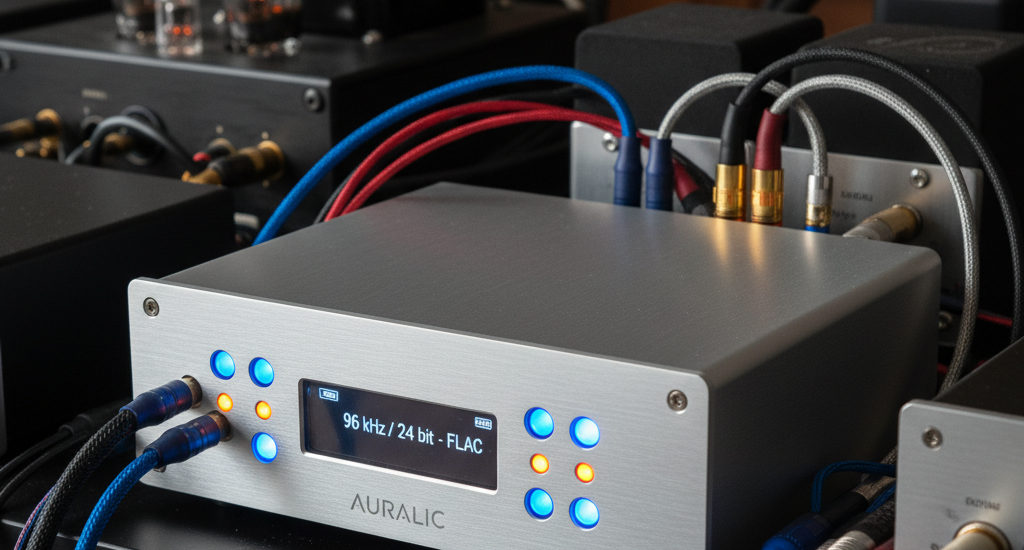
We invest in stunning headphones, powerful speakers, and even meticulously curated music libraries. Yet, a crucial component often gets overlooked, silently hamstringing our audio experience: the Digital-to-Analog Converter, or DAC. Far more than just a fancy acronym, the DAC is the unsung hero that translates the zeroes and ones of your digital music into the rich, vibrant sounds that caress your ears. This article will demystify the DAC, explain why it matters, and guide you towards incorporating this vital piece of tech into your listening setup, bridging the gap between digital data and sonic bliss.
Beyond the Built-In: Why an External DAC Matters
Every digital audio source – your smartphone, laptop, or streaming device – has a built-in DAC. However, these integrated circuits are often designed with cost and space-saving in mind, leading to compromises in sound quality. Think of them as the basic ingredients in a microwave meal; they get the job done, but they won’t win any Michelin stars. External DACs, on the other hand, are dedicated devices optimized for pristine audio conversion. They typically feature superior components, isolated power supplies, and more sophisticated clocking mechanisms. This translates to a cleaner, more detailed, and dynamic sound, allowing your expensive headphones or speakers to truly shine. Common mistakes include assuming your source device is “good enough” or overlooking the importance of this conversion step entirely. Many audiophiles report a noticeable upgrade even with entry-level external DACs, experiencing tighter bass, clearer vocals, and a wider soundstage – the perceived three-dimensional space of the music.
Decoding DAC Specifications: Jargon-Busting for Better Sound
When shopping for a DAC, you’ll encounter terms like “bit depth” and “sampling rate.” Don’t let them intimidate you! Bit depth (e.g., 16-bit, 24-bit) refers to the amount of detail captured in each audio sample. Higher bit depth means a greater dynamic range and finer resolution. Sampling rate (e.g., 44.1 kHz, 96 kHz) indicates how many times per second the audio signal is sampled. CD quality is 16-bit/44.1 kHz, while high-resolution audio can reach 24-bit/192 kHz or even higher. While higher numbers generally indicate better potential fidelity, the audible difference beyond 24-bit/96 kHz can be subtle for most listeners and dependent on the quality of your entire audio chain. Focus on a DAC that supports at least CD-quality audio for a noticeable improvement. Another key specification is the DAC chip itself (e.g., ESS Sabre, AKM, Cirrus Logic). While not an absolute indicator of quality, certain chips are renowned for their sonic characteristics. For beginners, it’s more important to look at reputable brands and user reviews rather than getting lost in chip model numbers.
Integrating a DAC into Your Listening Ecosystem
Adding a DAC to your setup is surprisingly straightforward. For desktop users, a USB DAC is the most common and convenient option. Simply connect it to your computer via a USB cable and then connect your headphones or speakers to the DAC’s output. For mobile listening, portable DAC/amp combos are excellent companions for smartphones, bypassing the phone’s internal audio circuitry. These often have their own batteries and provide extra power for demanding headphones. For home theater or dedicated two-channel systems, standalone DACs often feature optical (TOSLINK) or coaxial (S/PDIF) inputs for connecting to TVs, CD players, or streamers. Real-world examples include the AudioQuest DragonFly for a portable boost to your laptop or phone, or the Schiit Modi for an affordable yet powerful desktop solution. Remember to use high-quality cables – while not as impactful as the DAC itself, cheap cables can introduce noise or signal degradation. Experiment with different connection types if your DAC offers them, as some listeners prefer the sound of one over another.
The Sonic Transformation: Experiencing the DAC Difference
Once you’ve introduced a DAC into your setup, prepare for a sonic awakening. Music you thought you knew intimately will reveal new layers of detail. Instruments will have a more defined presence, vocals will be clearer and more natural, and the overall soundstage will feel more expansive. It’s like cleaning a dirty window to truly appreciate the view. This upgrade isn’t about making bad recordings sound good; it’s about allowing good recordings to sound their absolute best. Whether you’re a casual listener or a budding audiophile, investing in a quality DAC is a practical and relatively affordable way to significantly elevate your audio experience. Don’t let this unsung hero remain overlooked; give your digital music the clear, precise conversion it deserves and unlock the true potential of your audio equipment.