
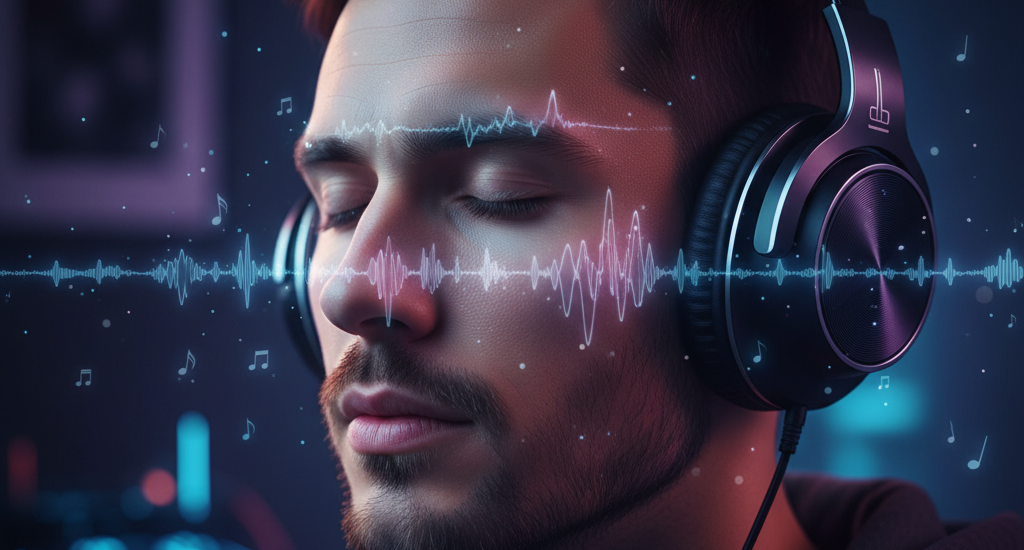
In a world saturated with digital distractions, music remains a sanctuary for many. But what if you’re missing out on the full emotional impact, the subtle textures, and the intricate details woven into your favorite tracks? This article goes beyond merely listing specs, delving into the art and science of truly hearing your music. Whether you’re a seasoned audiophile or just starting your sonic journey, prepare to elevate your listening experience from background noise to an immersive revelation.
The Underrated Art of Headphone Fit: More Than Just Comfort
We often focus on driver size and frequency response, but the humble fit of your headphones is arguably one of the most critical, yet overlooked, factors in sound quality. An improper fit doesn’t just lead to discomfort; it compromises bass response, distorts soundstage, and allows ambient noise to intrude. For over-ear headphones, ensure the earcups completely seal around your ears without clamping too tightly. Experiment with headband adjustments to find the sweet spot where the drivers are equidistant from your eardrums. With in-ear monitors (IEMs), tip selection is paramount. Many manufacturers include a variety of silicon and foam tips for a reason. Take the time to try each one. A good seal creates a passive noise cancellation effect, allowing the delicate nuances of the music to shine through. A common mistake is assuming larger tips automatically provide better bass; often, it’s about the snugness of the seal, not just the size. Think of it like a speaker enclosure – if it’s leaky, the bass escapes. A good tip creates a proper acoustic seal, maximizing bass presence and clarity. For example, upgrading from standard silicon tips to premium foam tips like Comply can dramatically improve bass extension and overall sound isolation, even on budget IEMs.
Decoding Audio File Formats: The Resolution Revolution
In the digital age, much of our music lives as a series of ones and zeros. But not all zeros and ones are created equal. Understanding audio file formats is crucial for unlocking genuine high-fidelity sound. Lossy formats, such as MP3 and AAC (typically found on streaming services like Spotify’s standard tier), compress audio by removing data deemed “inaudible” to the human ear. While efficient for storage and streaming, this process inevitably sacrifices detail. Think of it like a highly compressed JPEG image – smaller file size, but fuzzier details. Lossless formats, like FLAC, ALAC, and WAV, preserve all the original audio data. This means a larger file size but a faithful reproduction of the recording. High-Resolution Audio (Hi-Res Audio) takes it a step further, offering higher sampling rates and bit depths than standard CD quality (16-bit/44.1kHz). While the debate over the audibility of Hi-Res audio is ongoing, many listeners report experiencing a greater sense of space, clarity, and detail. Services like Tidal HiFi, Qobuz, and Apple Music (with their lossless and Hi-Res tiers) offer these higher-quality streams. A practical tip: start by ensuring your playback device (phone, DAP, computer) and DAC (Digital-to-Analog Converter) can handle these formats. Many modern devices do, but older equipment might struggle. Don’t waste money on Hi-Res subscriptions if your setup can’t fully utilize it.
The Hidden Impact of Cables and Power: Debunking Myths, Confirming Truths
The world of audio cables is often shrouded in controversy, with some claiming astronomical differences and others dismissing it as pure snake oil. The truth lies somewhere in the middle. For digital signals (like USB or optical cables), their primary job is to transmit data without errors. As long as the cable is well-constructed and not damaged, a $10 cable will likely perform identically to a $1000 cable. The audible differences usually come from poor shielding or faulty connectors introducing noise. However, for analog signals (like speaker wires or headphone cables), the physical properties of the cable *can* have an impact. Factors like wire gauge, conductor material (e.g., copper purity), and shielding influence resistance, capacitance, and inductance, which can subtly affect the signal. This is particularly noticeable in longer runs or with very sensitive equipment. The gains are often marginal and diminish rapidly with increasing price. A common mistake is overspending on “boutique” analog cables when significant improvements could be made elsewhere in the chain (speakers, headphones, amplifier). Focus on good quality, properly shielded cables with robust connectors. Similarly, “clean power” solutions aim to reduce electrical noise entering your audio components. While some audiophiles swear by power conditioners, for most setups, ensuring your components are plugged into a properly grounded outlet is a more impactful and cost-effective first step.